APPLIcation
Expanding the world of applications
Our visualization technology delivers solutions that exceed conventional limits — from the harshest decommissioning sites to space exploration and next-generation cancer therapy. By precisely capturing and rendering radiation, we accelerate both the building of a safer society and the exploration of unknown frontiers.
What is ETCC
World's first complete gamma-ray visualizationElectron Tracking Compton Camera — the world's first technology that captures gamma rays the way an optical camera captures its subject.
Draw the invisible light, accurately.
In 2017, the Cosmic-Ray Research Group of the Second Department of Physics at the Graduate School of Science, Kyoto University, led by Professor TANIMORI Toru (now Professor Emeritus) and Associate Professor TAKADA Atsushi, achieved the world's first complete gamma-ray visualization technology.Radiation can now be measured as images, remotely.
The following year, in 2018, this technology was used to directly image diffuse gamma rays arriving from the center of our Galaxy. We demonstrated, in space, that gamma rays can be photographed in the same way an optical camera captures its subject.
This technology was named ETCC (Electron Tracking Compton Camera). We are pursuing its social implementation as a radiation imaging and dosimetry technology — one that can quantitatively measure radioactive substances as image data.
Decommissioning of nuclear power plants, lunar resource exploration, nuclear medicine, nuclear security, fusion — the application potential of ETCC spans both today's most demanding sites and the frontiers of research.
Radiation Image Monitoring
Online imaging dosimetry at nuclear facilities
Visualizing minute radioactive gas leaks as 3D video. It is also capable of 3D imaging of radioactive plumes.
bringing online imaging dosimetry to nuclear facilities.
Visualizing faint leakage as video.
Using ETCC, we succeeded in 3D video imaging and quantitative measurement of minute radioactive gas leakage — far below regulatory limits — at an operating small-scale reactor. Faint radioactive gas that was previously hard to measure can now be captured as video, including its emission location and the time evolution of its diffusion.
This positions ETCC as a technology that enables online imaging of subtle radiation variations at nuclear facilities. Understanding radiation as a continuous spatial and temporal field — rather than as isolated points and snapshots — changes the quality of facility operation and safety management.
Combined with AI-based image processing, the technology will enable early-stage anomaly detection and rapid response. We will continue to advance social implementation by accumulating technical validation and on-site operation.
Application Fields
From critical sites to outer spaceETCC's visualization capability extends from critical sites on the ground to outer space and next-generation energy.
Radiation Measurement
Decommissioning · Clearance · Environmental MonitoringCapture radiation at nuclear plant decommissioning sites and surrounding environments — as imagery, from a distance. We support operational safety and efficiency on the ground, not with isolated readings, but with spatial and temporal context.
- 01 Radiation conditions inside nuclear power plants can be visualized through remote image-based measurement.
- 02 Wide-area radiation distribution, including airborne radiation, can be acquired as 3D image data.
- 03 The spatial distribution data ETCC provides contributes to improving the accuracy of radiation diffusion prediction models.
- 04 Both improved work efficiency and reduced operator exposure are expected on hazardous worksites.
Nuclear Medicine & Diagnostic Imaging
ETCC offers a new approach to challenges that conventional nuclear medicine imaging — SPECT and PET — has long struggled with. Lower exposure, lower cost, and innovative pharmacokinetic monitoring.
- 01 ETCC is positioned as a technology that could play a significant role in realizing “theranostics” — the integration of diagnosis and therapy.
- 02 The challenges of conventional nuclear medicine imaging methods such as SPECT and PET can be addressed from a new measurement principle.
- 03 Innovative pharmacokinetic monitoring of radioisotopes (RI) with low exposure and low cost may become possible.
Enables observation of pharmacokinetics for a wide range of RI nuclides
We performed molecular imaging on mice using a small ETCC suitable for human diagnostics. After administering a PET drug, we detected a tumor within 5 minutes of imaging and successfully captured images of the drug moving from the tumor to the bladder.
| Nuclide | Ce-139 | Cr-51 | Ba-133 | I-131 | Au-198 | Na-22 | F-18 | Cu-64 | Cs-137 | Mn-54 | Fe-59 | Zn-65 | Co-60 |
|---|---|---|---|---|---|---|---|---|---|---|---|---|---|
| Energy [keV] |
167 | 320 | 354 | 364 | 410 | 511 1275 |
511 | 511 | 662 | 835 | 1095 1292 |
1116 | 1173 1333 |
| Life | 137.6 day |
27.7 day |
10.52 year |
8.01 day |
2.6 day |
2.609 year |
109.8 min |
12.70 hour |
30.04 year |
312.1 day |
44.5 day |
244 day |
5.271 year |
* Scroll horizontally to view.
Nuclear Security
Homeland security and CBRNE detectionSafeguarding public space, quietly and reliably. ETCC's ability to image radiation remotely brings new options to CBRNE countermeasures, nuclear material detection, and situational awareness. It will serve as a decisive tool for radiological and nuclear defense against CBRNE threats.
- 01 ETCC supports rapid and accurate response to nuclear terrorism and the spread of radiation, including dirty-bomb scenarios, through both detection and imaging.
- 02 By contributing to the detection of nuclear materials and the awareness of their state, ETCC strengthens nuclear security capabilities.
- 03 Remote image-based measurement makes ETCC particularly effective in environments where safety is critical — airports, ports, public facilities, border control.
- 04 We will advance the social implementation step-by-step through continued dialogue and validation with relevant institutions.
Space, Lunar Resource Development & Nuclear Fusion
From ground-level safety to uncharted frontiers in space, and on into next-generation energy. ETCC's visualization capability reaches the edge of science as well.
- 01 This field includes two distinct themes — space & lunar resource development, and nuclear fusion. They are presented in separate sub-blocks below.
Space & Lunar Resource Development
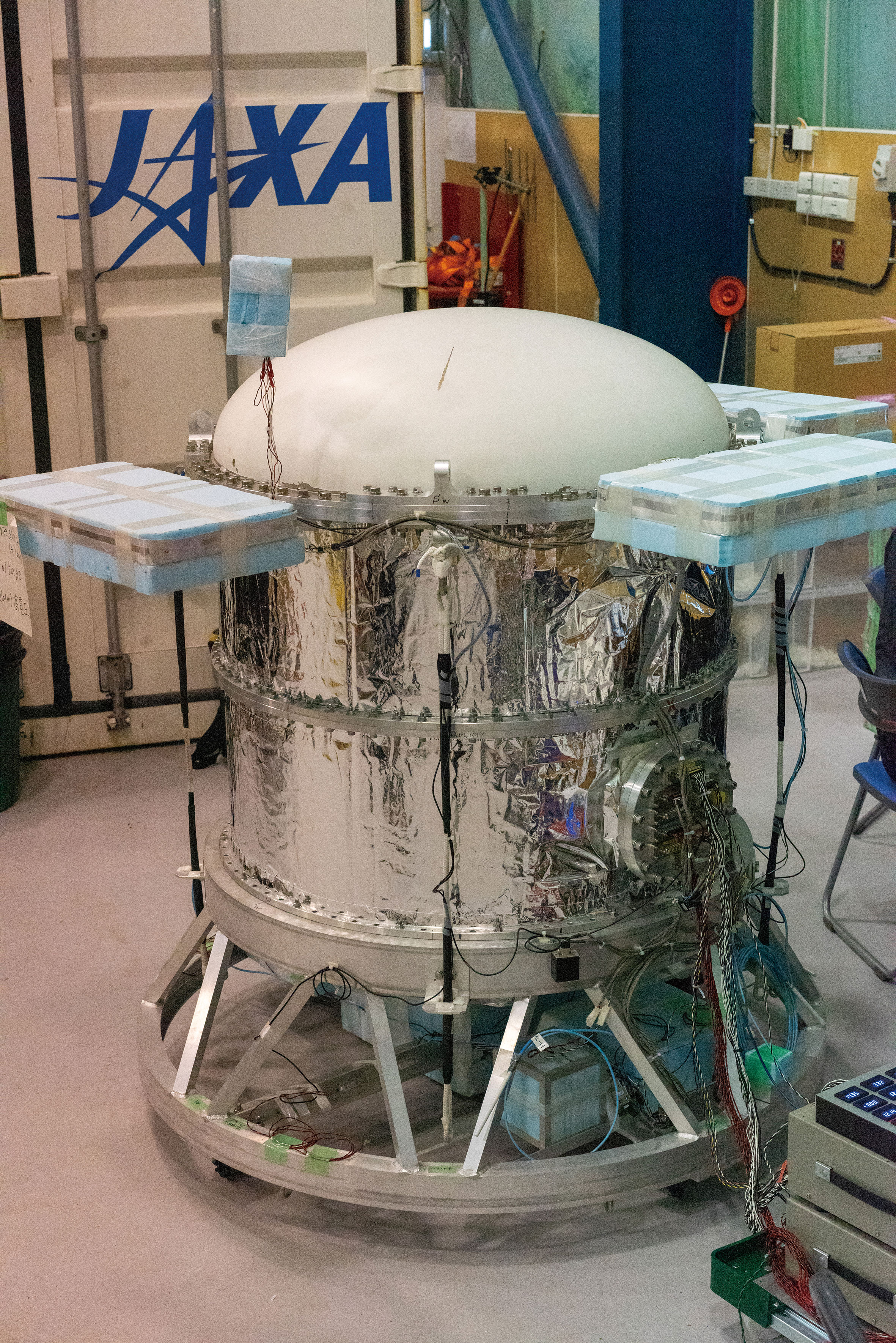
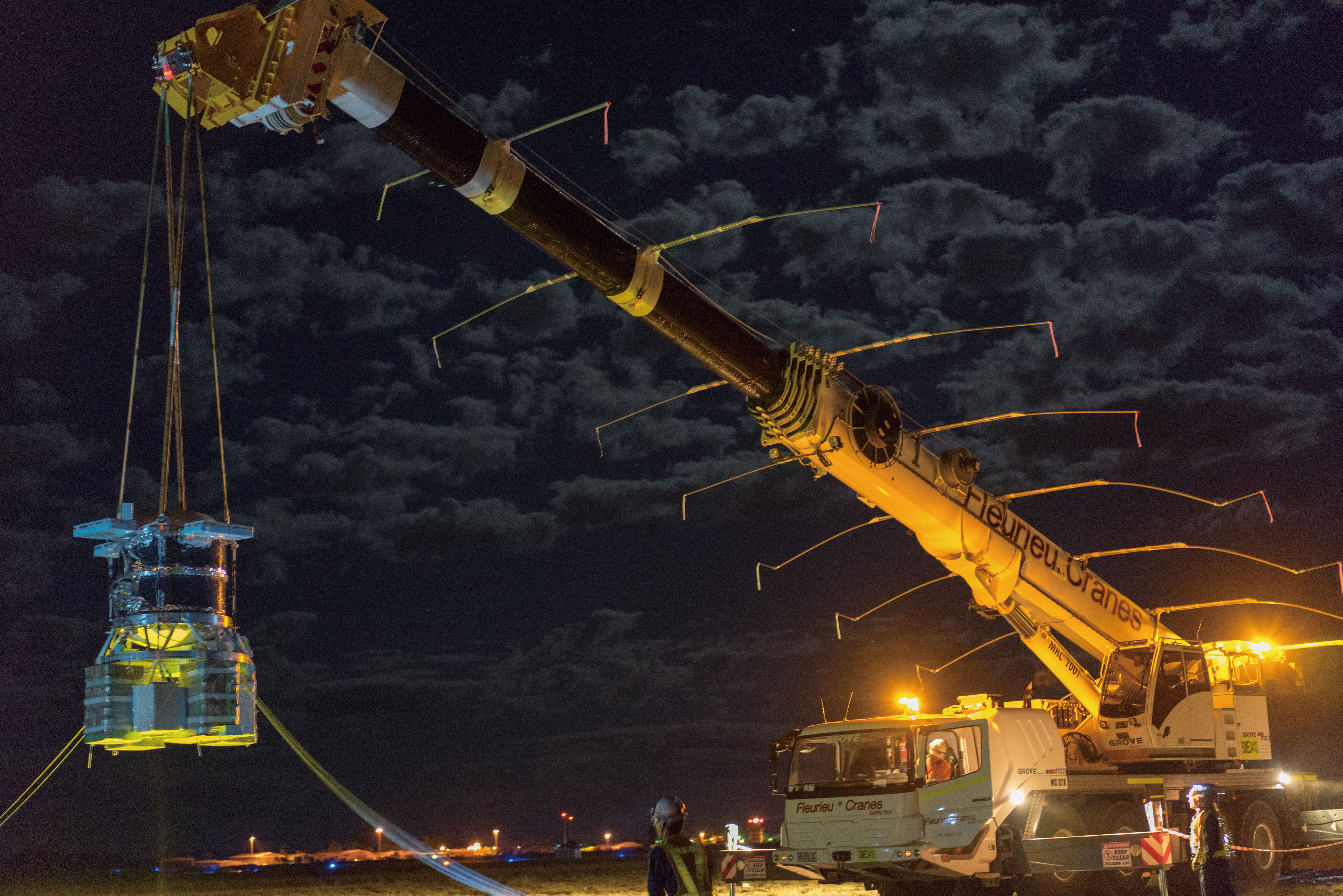
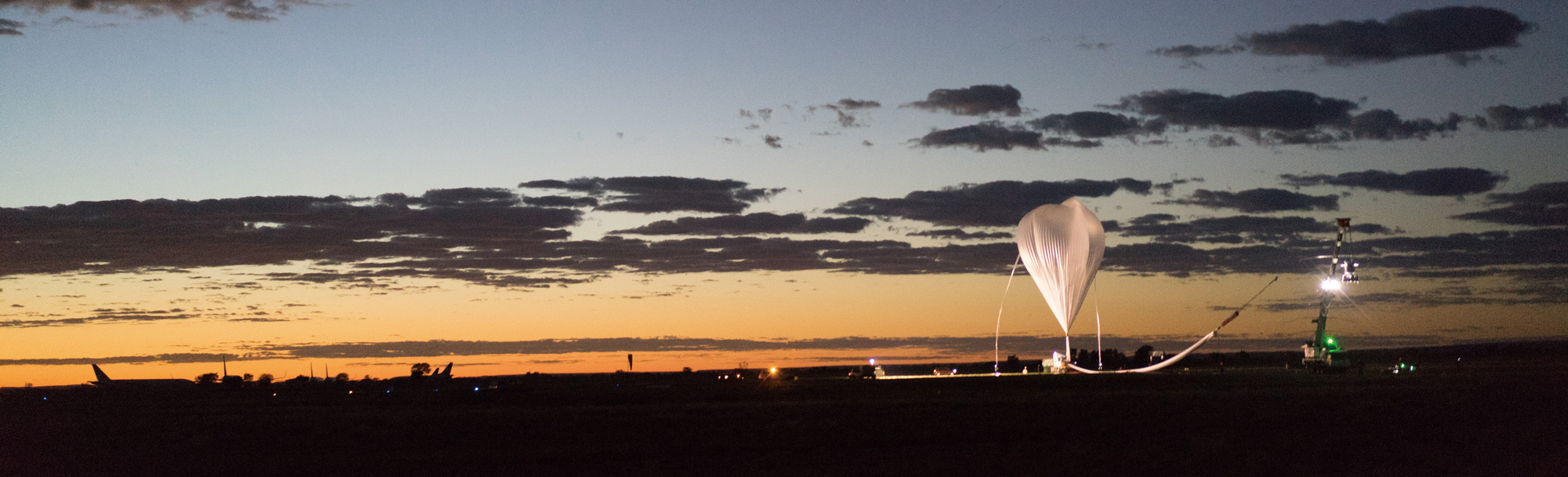
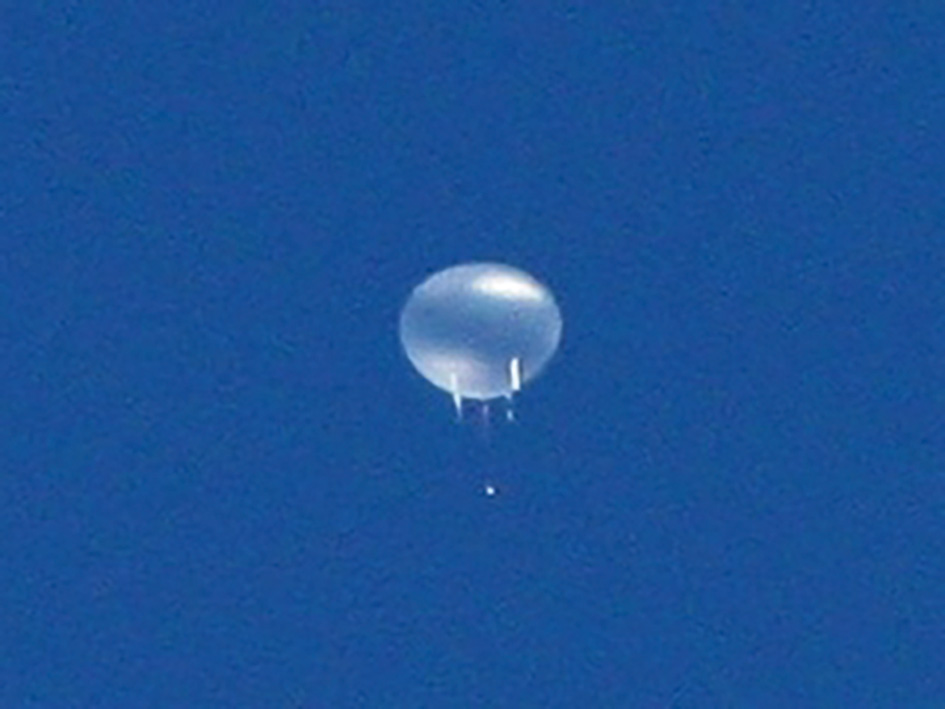
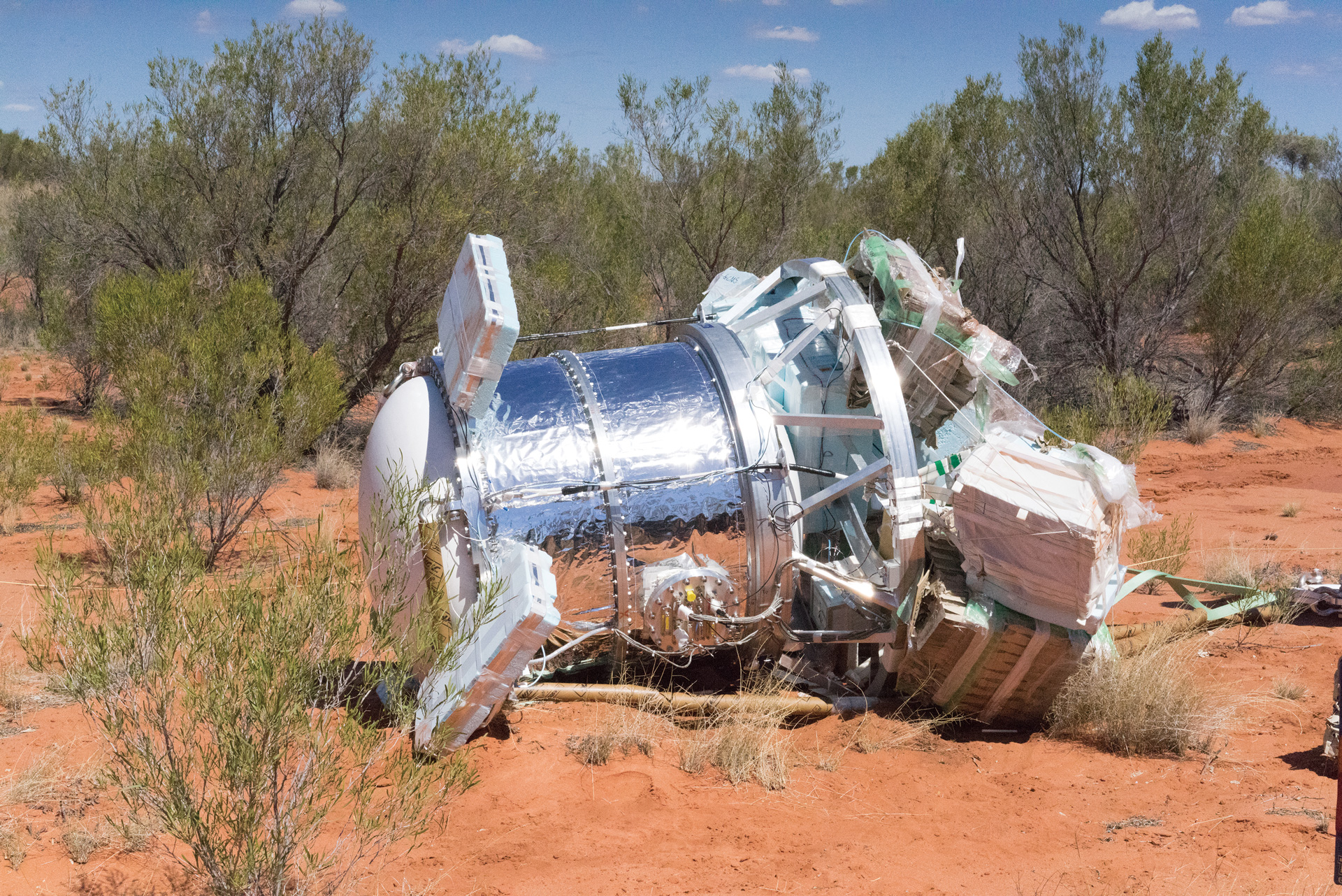
- 01 In 2018, a joint experiment between JAXA and Kyoto University observed the Milky Way and demonstrated ETCC's gamma-ray imaging capability in space. This was a landmark result showing that gamma rays can be captured as images even in the noise-filled environment of space. It achieved in a single day the imaging that Western research institutions could not accomplish in ten years.
- 02 Gamma-ray observation can contribute to building resource maps of the Moon. This is positioned as a key approach for future lunar resource exploration.
- 03 Operating in space requires extensive validation — radiation tolerance, low power consumption, and communication constraints. We pursue this on a long-term horizon, in collaboration with research institutions.
Successful gamma-ray imaging of the galaxy in 2018
Using a large JAXA balloon, we succeeded in capturing gamma-ray images of a galaxy that had not been visible for 10 years by European and American satellites in just one day.
Nuclear Fusion
- 01 ETCC has potential applications in visualizing the behavior of fast ions inside fusion plasma. By capturing secondary radiation from gamma rays and neutrons as spatial distributions, it can support plasma diagnostics.
- 02 By leveraging ETCC's principle of physically rejecting noise, it can be used to identify where exactly anomalies occur within the plasma.
- 03 This may contribute to stable operation and precise control of fusion reactors. We continue validation through collaboration with research institutions and industry.
From technical possibility
to social implementation.
For inquiries about ETCC application fields and technology utilization, joint research, or adoption studies, please contact us using the form. A representative will get back to you.